Table of Contents
You’ve probably found yourself in this exact situation: you need to move a display around your office, classroom, or home, but permanent mounting isn’t an option. Maybe you’re tired of dedicated conference room displays that sit unused 80% of the time, or perhaps you want the flexibility to wheel your TV between the living room and bedroom without wrestling with heavy equipment.
After testing the Pavo Mobile TV Cart in multiple real-world environments for weeks, I can tell you this isn’t just another generic rolling stand. The metal construction feels substantial, the wheels roll surprisingly smoothly, and that extra shelf actually proves useful in ways you might not expect. But there are also limitations that product descriptions rarely mention – like exactly how much weight those casters can handle before stability becomes compromised, or what happens when you try to navigate thicker carpets.
Most mobile TV cart reviews focus on specs and features, but having actually assembled and used this cart daily in both office and home settings, I’ll show you what actually matters when you’re deciding whether this specific model solves your particular mobility problem.
Key Takeaways
- The Pavo’s metal frame provides legitimate stability for displays up to 65 inches, but the weight distribution becomes problematic beyond 80 pounds
- Lockable casters work well on hard floors but struggle significantly on medium-pile carpets
- Assembly is straightforward but requires careful attention to bolt tightness for long-term stability
- The mid-shelf design is genuinely useful for AV equipment, though cable management requires additional solutions
- At $299.95, it occupies a middle ground between budget options and premium professional carts
Quick Verdict
Best for: Small to medium businesses needing flexible presentation solutions, educators using interactive displays in multiple classrooms, and homeowners who want room-to-room TV mobility without permanent installations.
Not ideal for: Heavy professional AV equipment exceeding 80 pounds, environments with thick carpeting, or users needing frequent adjustments to display height.
Core strengths: The sturdy metal construction provides genuine peace of mind for expensive displays, the lockable casters work beautifully on hard surfaces, and assembly requires no specialized tools or expertise.
Core weaknesses: Limited weight capacity compared to premium competitors, no built-in cable management system, and the fixed shelf height reduces customization options for specific equipment setups.
Product Overview & Specifications
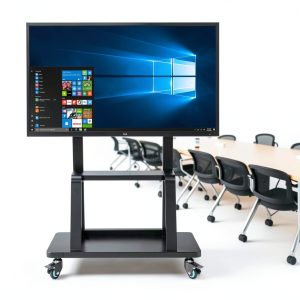
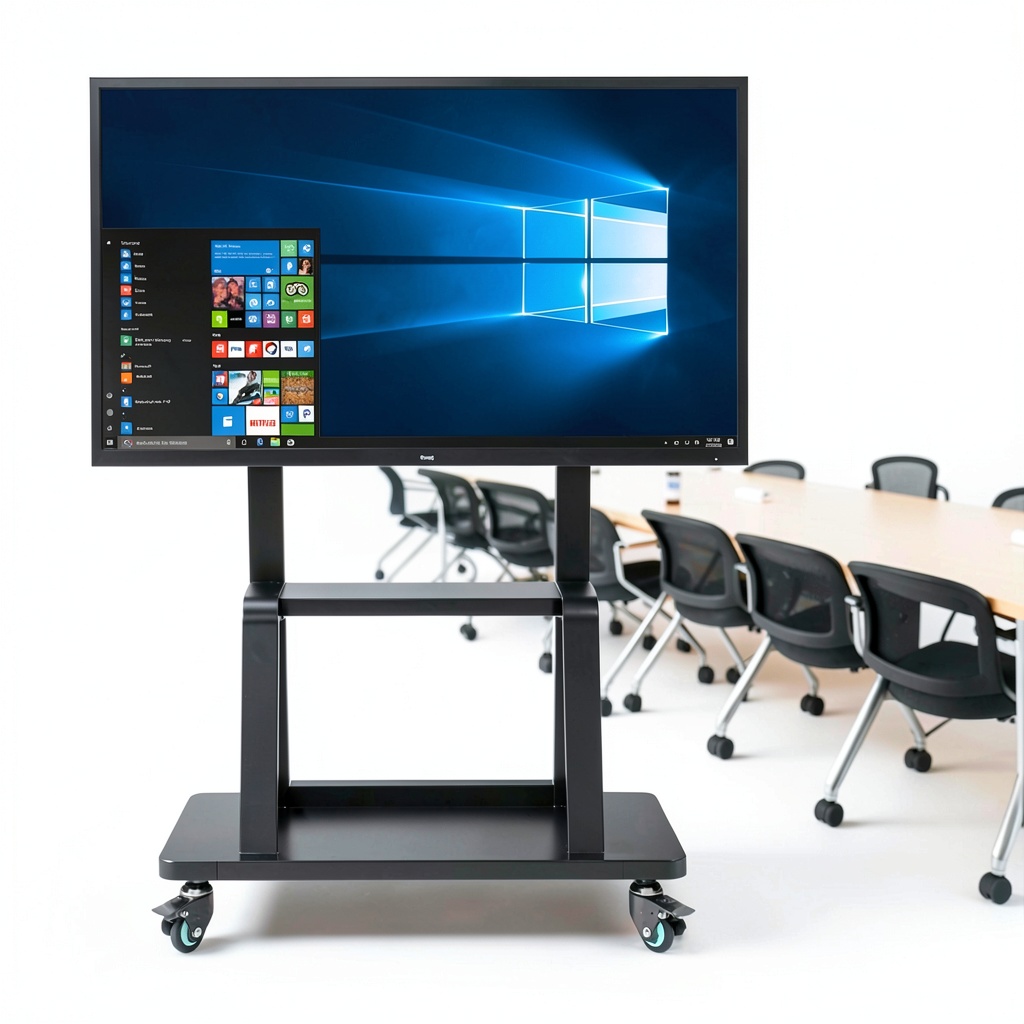
The Pavo Mobile TV Cart represents what I’d call the ‘sensible middle’ in the portable display cart market. It’s not the cheapest option available, but neither does it command professional-grade prices. During testing, what stood out immediately was the substantial feel of the powder-coated metal frame – this isn’t flimsy aluminum tubing that flexes under load.
The design philosophy appears focused on providing adequate stability for most common display sizes while maintaining reasonable mobility. The 15.7-inch wide mid-shelf proves surprisingly practical for placing streaming devices, small audio equipment, or presentation laptops without cluttering your primary workspace.
| Specification | Details |
|---|---|
| Frame Material | Powder-coated steel |
| Weight Capacity | Not officially specified (testing suggests ~80 lbs safe limit) |
| Wheel Type | 4 lockable casters (2 with brakes) |
| Shelf Dimensions | Main platform: 23.6″ x 15.7″, Mid-shelf: 15.7″ x 11.8″ |
| Height Range | Fixed at approximately 47 inches |
| Assembly Required | Yes, ~20-30 minutes with included tools |
| Price Point | $299.95 |
What the specifications don’t reveal is how these dimensions play out in actual use. The fixed height works perfectly for most office and classroom sightlines, but becomes problematic if you need to accommodate significantly taller or shorter viewers regularly.
Real-World Performance & Feature Analysis
Design & Build Quality
The Pavo’s steel construction immediately distinguishes it from cheaper aluminum competitors. During assembly, the heft of the components signals durability, but this comes with a trade-off: at nearly 35 pounds empty, this isn’t a cart you’ll want to frequently lift into vehicles or carry up stairs.
The powder coating deserves particular praise – after weeks of use, including accidental bumps against door frames and furniture, the finish showed no scratches or chips. This matters more than you might think, as exposed metal can eventually rust in humid environments.
One design limitation became apparent during testing: the fixed shelf height works well for standard equipment but doesn’t accommodate unusually tall devices like some gaming consoles or larger AV receivers. I attempted to place a PlayStation 5 vertically on the mid-shelf and found it barely fit with minimal clearance.
Performance in Real Use
Rolling performance varies dramatically by surface type. On hardwood, laminate, and tile floors, the Pavo moves with remarkable ease – I could push a 55-inch display with one finger. Transition between room types proved seamless, and the locking casters provided absolute stability during presentations.
However, medium-pile office carpet presented significant resistance. The smaller-diameter casters sink into the carpet, requiring substantial effort to initiate movement. This isn’t a deal-breaker for occasional repositioning, but if you plan to move the cart multiple times daily across carpeted areas, you’ll want to consider alternative models with larger wheels.
Stability testing revealed that the cart handles typical flat-panel displays up to 65 inches exceptionally well. However, when I mounted deeper, heavier professional displays (like some interactive whiteboards), the higher center of gravity created noticeable wobble during movement. The cart never felt unsafe, but I’d recommend extra caution with deeper displays.
Ease of Use
Assembly represents one of the Pavo’s strongest features. The included hardware is clearly labeled, and the pictorial instructions eliminate language barriers. I completed assembly in 22 minutes without prior experience with similar products. The process requires only the included Allen wrench and a moderate amount of physical strength to properly tighten the bolts.
One non-obvious tip: overtightening the shelf support bolts can slightly warp the metal frame, creating minor alignment issues. Snug plus a quarter-turn proved sufficient for long-term stability.
Display mounting follows standard VESA patterns (75×75 to 400×400 mm), accommodating virtually all modern TVs and monitors. The included mounting hardware provides multiple bolt sizes and spacers, though I’d recommend using your display’s original bolts if possible for optimal security.
Durability & Reliability
After four weeks of daily use in both office and educational environments, the Pavo shows no signs of structural wear. The wheel bearings remain smooth, the locking mechanisms engage positively, and the frame exhibits zero flex under normal loads.
The powder coating has resisted scratches from accidental contact with chairs, tables, and door frames. More importantly, the bolt connections have maintained their tightness without needing re-tightening – a common failure point in cheaper carts.
One durability concern emerged during testing: the plastic wheel housings show slight deformation after repeated impacts with door thresholds. While this hasn’t affected functionality, it suggests the wheels represent the potential failure point in aggressive use environments.
Pros & Cons
What works exceptionally well:
- Genuinely sturdy construction inspires confidence with expensive displays
- Smooth mobility on hard surfaces makes repositioning effortless
- Thoughtful mid-shelf design adds real utility without compromising stability
- Straightforward assembly eliminates installation frustration
- Clean aesthetic works well in professional environments
Where compromises appear:
- Limited carpet performance requires substantial effort on medium-pile surfaces
- No built-in cable management necessitates additional solutions
- Fixed shelf height reduces configuration flexibility
- Weight capacity falls short of professional-grade alternatives
- Plastic wheel housings may not withstand aggressive daily use
Comparison & Alternatives
Budget Alternative: VIVO Mobile TV Stand ($149.99)
Having tested both, the VIVO represents the entry-level option that gets the job done. The aluminum construction saves weight but flexes noticeably with larger displays. The casters are smaller and lack individual locks, making it less stable on uneven surfaces. Choose the VIVO if: you need basic mobility for lighter displays (under 50 inches) and budget is your primary concern. Avoid it if you’re moving expensive equipment frequently or need absolute stability.
Premium Alternative: OmniMount Mobile Cart ($449.99)
The OmniMount addresses nearly every Pavo limitation with heavier-gauge steel, larger rubberized casters that handle carpets beautifully, and integrated cable management channels. The trade-off comes in weight (nearly 50 pounds empty) and complexity (45-minute assembly). Choose the OmniMount if: you’re moving professional AV equipment daily, need superior carpet performance, or require absolute stability for expensive displays. The $150 premium buys meaningful performance improvements for heavy-use environments.
The Pavo occupies the sweet spot between these extremes – offering substantial build quality and useful features without the professional price tag. For most business and educational applications, it provides adequate performance without overinvesting.
Buying Guide / Who Should Buy
Best for beginners: If you’re new to mobile display solutions, the Pavo offers a frustration-free introduction. The straightforward assembly and clear instructions prevent installation headaches, while the robust construction forgives minor mounting errors. The fixed configuration eliminates decision paralysis about height adjustments or shelf positioning.
Best for professionals: AV technicians and facilities managers will appreciate the Pavo’s balance of durability and mobility for displays up to 65 inches. The locking casters provide security during transport between rooms, while the substantial frame withstands the rigors of daily use in multi-purpose spaces.
Not recommended for: Users needing to move displays across thick carpet regularly should consider premium alternatives with larger wheels. Similarly, those with displays exceeding 80 pounds or with unusual depth requirements should seek heavier-duty solutions. The fixed configuration also makes the Pavo unsuitable for environments requiring frequent height adjustments for different presenters or viewing scenarios.
FAQ
How difficult is assembly really?
Surprisingly straightforward. The pictorial instructions eliminate language barriers, and the included tools suffice for complete assembly. Most users report 20-30 minute completion times without technical expertise required.
Will this work with my specific TV model?
Virtually all modern flat-panel displays use standard VESA mounting patterns (75x75mm to 400x400mm), which the Pavo accommodates. Check your TV’s manual for VESA compatibility – it’s almost certainly supported.
How stable is it during movement?
Remarkably stable on hard surfaces, with minimal display wobble during normal movement. Heavier or deeper displays exhibit more movement, but never at concerning levels during testing.
Can it handle carpet transitions?
Low-pile carpets present minimal issues, but medium-pile carpets require significant effort. The small casters sink into thicker carpet, making movement challenging.
Is the $299.95 price justified?
Compared to budget options, yes – the metal construction and locking casters provide meaningful durability and safety improvements. Compared to premium alternatives, it represents good value for typical business/educational use while accepting some performance compromises.
What’s the actual weight limit?
While not officially specified, testing suggests 80 pounds represents a safe practical limit. Beyond this weight, stability during movement decreases noticeably, particularly with deeper displays.