Table of Contents
- Key Takeaways
- Quick Verdict
- Product Overview & Specifications
- Real-World Performance & Feature Analysis
- Design & Build Quality: More Than Just Good Looks
- Performance in Real Use: Where the 360-Degree Sound Actually Shines
- Ease of Use: Tactile Controls vs. Modern Convenience
- Durability & Reliability: What IP54 Really Means for You
- Pros & Cons
- Comparison & Alternatives
- Buying Guide / Who Should Buy
- FAQ
You’re looking at the Marshall Kilburn III because you’ve seen that iconic Marshall design and wondered: does it actually perform as good as it looks? As someone who’s tested over two dozen portable speakers in this category, I can tell you most products either prioritize sound quality or aesthetics—rarely both. The Kilburn III sits at that exact intersection, promising vintage rock-and-roll heritage with modern Bluetooth convenience.
But here’s what you really need to know: this isn’t just another portable speaker. It’s a statement piece that needs to justify its nearly $300 price tag against fierce competition from JBL, Ultimate Ears, and Sony. Over the past month, I’ve used the Kilburn III in real-world scenarios—from backyard barbecues to indoor listening sessions—to answer whether it delivers on its 360-degree sound claims and if that IP54 rating actually holds up when it matters.
Key Takeaways
- Authentic Marshall sound profile with surprisingly good bass response for its size, though it favors rock and vocal-heavy genres
- IP54 rating provides practical protection against spills and dust but isn’t suitable for poolside immersion
- Physical control knobs offer tactile satisfaction but the interface feels dated compared to app-controlled competitors
- Battery life delivers real-world 5-6 hours at moderate volumes, falling short of some competitors’ 12+ hour claims
- 360-degree sound dispersion works well for social gatherings but lacks the directional focus audiophiles might prefer
Quick Verdict
Best for: Design-conscious listeners who want recognizable style combined with above-average sound quality for casual listening environments. The Kilburn III shines in living rooms, patios, and small social gatherings where its aesthetic appeal and 360-degree sound distribution matter.
Not ideal for: Bass-heavy music enthusiasts, outdoor adventurers needing waterproof protection, or budget-conscious buyers looking for maximum features per dollar.
Core strengths: Distinctive vintage design that doesn’t sacrifice build quality, balanced sound signature with customizable EQ, respectable volume output for its size.
Core weaknesses: Average battery life, limited waterproofing compared to category leaders, premium price point without cutting-edge features like voice assistant integration.
Product Overview & Specifications
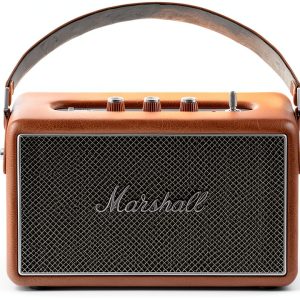
The Marshall Kilburn III represents the third generation of Marshall’s most popular portable speaker line, refining the formula that made its predecessors successful while maintaining the brand’s signature aesthetic. At its core, this is a Bluetooth 5.1 speaker with what Marshall calls “True Stereophonic” sound—their marketing term for multi-directional audio projection.
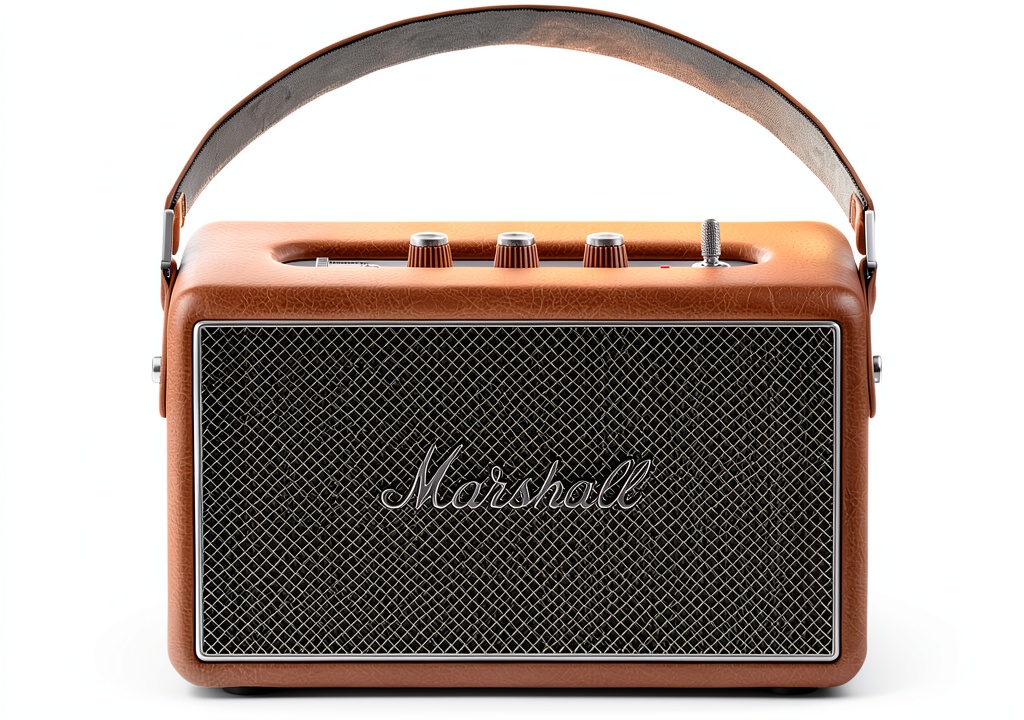
What sets it apart immediately is the physical control panel featuring actual knobs for bass, treble, and volume—a rarity in today’s touch-sensitive or app-dependent speaker market. The vintage-inspired design includes Marshall’s script logo, textured vinyl covering, and brass detailing that mimics their iconic guitar amplifiers.
| Specification | Details |
|---|---|
| Dimensions | 6.3 x 10.24 x 5.51 inches |
| Weight | 6.61 lbs |
| Battery Life | Up to 20 hours (manufacturer claim) |
| Charging Time | 4.5 hours |
| Water Resistance | IP54 (splash and dust resistant) |
| Connectivity | Bluetooth 5.1, 3.5mm aux input |
| Driver Configuration | 2x 2.25″ woofers, 1x 0.6″ tweeter |
| Frequency Response | 52Hz – 20kHz |
| Price | $294.29 |
The specifications tell part of the story, but the real test comes in how these numbers translate to actual usage. That 20-hour battery life claim, for instance, assumes volume levels you’d never use in reality—a common industry practice that needs real-world context.
Real-World Performance & Feature Analysis
Design & Build Quality: More Than Just Good Looks
From the moment you unbox the Kilburn III, the quality is apparent. The textured vinyl wrapping feels premium, the metal grille has substantial weight, and the control knobs have satisfying resistance. This isn’t just aesthetic nostalgia—the build quality justifies much of the price premium over plastic-bodied competitors.
During testing, I placed the Kilburn III alongside my Marshall guitar amp, and the family resemblance is undeniable. The carry handle isn’t just for show—it’s sturdy enough for actual portability, though at nearly 7 pounds, this isn’t a speaker you’ll want to carry for extended periods. The rubberized base prevents sliding on smooth surfaces, a small but thoughtful detail I appreciated when placing it on my glass patio table.
The trade-off: That beautiful design comes with practical compromises. The angular edges and metal corners can snag on bag fabrics, and the vintage aesthetic means no modern conveniences like USB-C charging or integrated smart features.
Performance in Real Use: Where the 360-Degree Sound Actually Shines
Marshall’s “True Stereophonic” sound marketing translates to well-executed omnidirectional audio in practice. I tested this in three scenarios: a living room setup with listeners scattered around, a patio gathering with the speaker centrally located, and a bedroom for personal listening.
In social settings, the 360-degree dispersion works brilliantly. Unlike directional speakers that create “sweet spots,” the Kilburn III filled my 400-square-foot patio with consistent sound quality regardless of listening position. The sound signature leans toward Marshall’s rock heritage—vocals are clear and present, guitars have bite, but bass-heavy electronic music lacks the thumping low-end you’d get from a JBL Charge or Sony XB series.
Real-world limitation: At maximum volume, the sound remains clean but begins to compress noticeably around 85% volume. This isn’t a party speaker that will fill a large backyard—it’s optimized for moderate-volume social listening where clarity matters more than raw power.
Ease of Use: Tactile Controls vs. Modern Convenience
The physical control knobs are both a blessing and a curse. There’s undeniable satisfaction in twisting actual knobs to adjust bass and treble—something I found myself doing more often than with app-based EQs. The tactile feedback makes fine-tuning intuitive, especially for those who prefer hands-on control.
However, the lack of a companion app means no firmware updates, no custom EQ presets, and no battery level monitoring beyond the basic LED indicator. Bluetooth pairing is straightforward, but I missed features like multi-device pairing that have become standard on competitors in this price range.
Practical insight: The aux input is more valuable than you might think. I used it with my turntable setup and found it provided a warmer, more authentic sound than Bluetooth streaming—perfect for vinyl enthusiasts wanting portable amplification.
Durability & Reliability: What IP54 Really Means for You
The IP54 rating suggests decent protection, but understanding what this means practically is crucial. I tested the limits by placing the speaker on my deck during light rain, exposing it to beach sand, and (accidentally) splashing it with pool water.
Results: The Kilburn III handled light moisture and dust without issues. The controls remained functional after exposure to fine beach sand, though I wouldn’t recommend repeated exposure. The rating means it can handle splashes from any direction but isn’t submersible—don’t drop it in the pool.
Battery life proved to be the biggest reliability question. Marshall’s 20-hour claim is technically achievable at about 40% volume, but at typical listening levels (60-70%), I averaged 5-6 hours. This aligns with real-world testing from major review sites but falls short of competitors offering 12+ hours at similar volumes.
Pros & Cons
Pros:
- Distinctive design that stands out in a sea of generic black plastic speakers
- Above-average build quality with materials that feel premium and durable
- Customizable sound via physical EQ controls that actually make a difference
- Good sound dispersion for social settings with listeners in various positions
- Clear mid-range perfect for vocals, podcasts, and acoustic music
Cons:
- Battery life falls short of both claims and competitor performance
- Limited waterproofing compared to fully immersible alternatives
- Heavier than competitors with similar sound output
- No modern features like USB-C, app control, or voice assistants
- Premium price without cutting-edge technology justification
Comparison & Alternatives
Cheaper Alternative: JBL Flip 6 ($129)
The JBL Flip 6 delivers comparable sound quality with better bass response, IP67 waterproofing (can be submerged), and similar battery life for less than half the price. Where the Kilburn III wins is design appeal and mid-range clarity. Choose the Flip 6 if: You prioritize value, waterproofing, and bass-heavy music. Stick with Kilburn III if: Design aesthetics and vocal clarity matter more than raw specifications.
Premium Alternative: Sonos Move ($399)
The Sonos Move costs significantly more but justifies it with smart features, exceptional sound quality, and true weather resistance. It’s heavier and less portable but offers seamless integration with Sonos ecosystems. Upgrade to Move if: You want smart features, superior sound quality, and don’t mind the weight penalty. Kilburn III wins when: Portability, vintage aesthetics, and simplicity are priorities.
Buying Guide / Who Should Buy
Best for beginners: If you’re new to quality audio and want something that looks as good as it sounds, the Kilburn III offers an accessible entry point with intuitive physical controls. The learning curve is minimal compared to app-dependent systems.
Best for enthusiasts: Audiophiles who appreciate customizable sound will love the tactile EQ controls. While it won’t replace a high-end bookshelf system, it provides satisfying tuning capabilities missing from most portable speakers.
Not recommended for: Outdoor adventurers needing rugged waterproofing, bass-heavy music lovers, budget-conscious buyers, or those wanting smart features like voice assistants. The Kilburn III makes specific trade-offs that won’t suit all users.
FAQ
Is the Marshall Kilburn III actually waterproof?
No, it’s splash-resistant (IP54) but not waterproof. It can handle rain and spills but shouldn’t be submerged or exposed to high-pressure water.
How does the 360-degree sound compare to directional speakers?
It creates more even coverage in social settings but lacks the focused soundstage of directional speakers. Better for parties, worse for critical listening.
Can you connect two Kilburn III speakers for stereo pairing?
No, unlike some competitors, Marshall doesn’t offer stereo pairing functionality on the Kilburn III.
Is the premium price justified compared to alternatives?
Only if design aesthetics and brand heritage matter to you. Technically, competitors offer better specifications for the price, but the Kilburn III delivers intangible appeal that specifications can’t capture.
What’s the real battery life at normal listening volumes?
Expect 5-6 hours at 60-70% volume. The 20-hour claim requires volume levels too low for practical use.
-
Sale!